
Cosmos Pet Grooming Academy provides a competency-based dog grooming course emphasizing breed-specific haircutting, coat and skin assessment, safe handling, and tool maintenance. Training combines supervised repetitive labs, timed assessments dog grooming course, and standardized performance metrics to convert theory into reliable motor skills. Instructors typically hold industry credentials and provide one-on-one coaching plus ongoing mentorship. Facilities include commercial-grade stations and digital resources. Certification is modular and auditable, with placement support. For a clearer cost-versus-return picture, the full breakdown follows.
Course Curriculum and Skills Taught
Focused on practical competency, the Cosmos Pet Grooming Academy curriculum covers foundational grooming techniques, breed-specific haircutting, canine and feline coat care, basic animal anatomy, skin and coat health assessment, safe handling and restraint, and sanitation and salon safety protocols. The curriculum emphasizes efficient skill acquisition, integrating breed specific styling principles with measurable performance standards. Modules parse coat types, trimming geometries, clipper selection, and tool maintenance with exacting metrics. Assessment includes diagnostic identification of dermatologic indicators and referral protocols, aligning grooming choices with animal welfare. Nutritional literacy appears as contextual knowledge, linking canine nutrition to coat condition and recovery timelines. Instructional materials are modular, updateable, and oriented to iterative innovation, enabling practitioners to adopt novel techniques while maintaining regulatory compliance and evidence-based practices.
Hands-On Training and Practical Experience
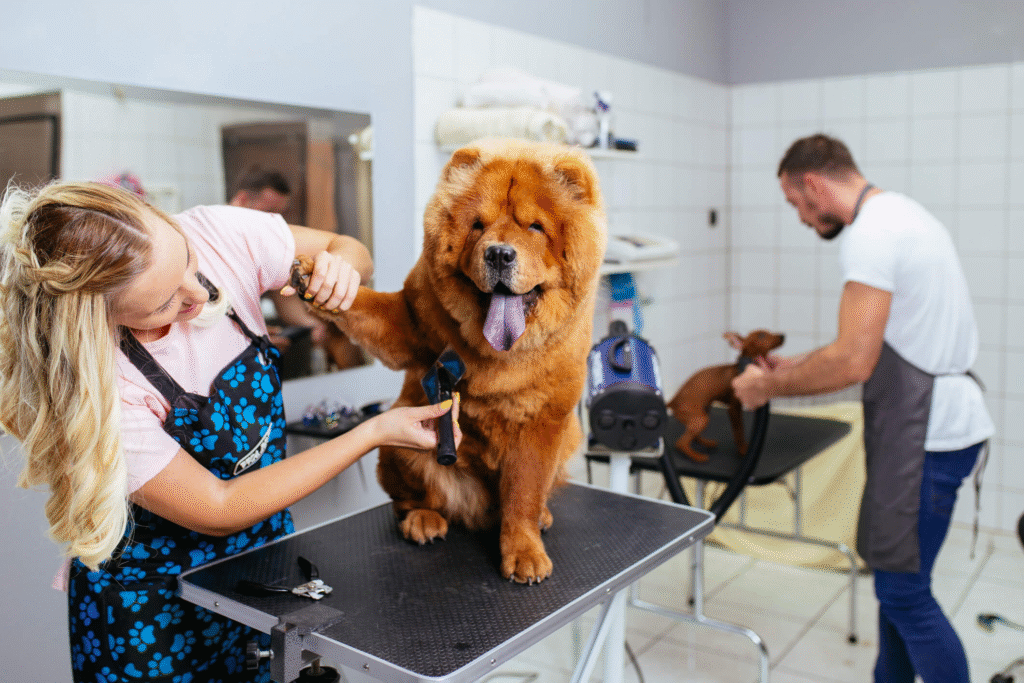
Building on the curriculum’s emphasis on measurable performance and clinic-standard protocols, hands-on training centers on supervised, repetitive practice that converts theoretical knowledge into reliable motor skills. The program stages progressive labs where trainees execute standardized grooming sequences on varied breeds, monitored by objective metrics. Assessment protocols include timed tasks, error-rate tracking, and hands on assessments tied to competency checklists. Simulated clinic workflows integrate sanitation, equipment calibration, and client-handling scripts to mirror commercial constraints. Complementary modules present curated real world case studies that expose learners to atypical coat conditions, behavioral variance, and time-pressured corrections. Feedback loops use video review and quantified scoring to accelerate motor learning. Outcomes focus on reproducible technique, throughput efficiency, and immediate applicability to innovative salon environments.
Instructor Expertise and Student Support
Typically, instructors possess industry-certified credentials and a minimum of five years of salon or clinical grooming experience, supplemented by formal pedagogy training. The program emphasizes experienced mentors who deliver structured feedback, standardized assessment, and adaptive instruction. Student support includes scheduled consultations, peer-review sessions, and a clear escalation path for technical or welfare concerns. Ongoing mentorship is formalized through post-course check-ins and optional advanced clinics, reinforcing skill transfer and innovation adoption. Elements that define instructional quality:
- Credential verification and continuous professional development.
- Direct observation with measurable performance metrics.
- Scheduled one-on-one coaching and targeted remediation.
- Post-completion mentorship and industry placement guidance.
The approach is data-driven, scalable, and oriented toward rapid competency development without superfluous content.
Facilities, Tools, and Learning Resources
In purpose-designed training spaces, Cosmos Pet Grooming Academy houses commercial-grade grooming stations, climate-controlled bathing suites, and padded handling tables arranged to mirror professional salon workflow. Facilities integrate modular layouts to support simultaneous practical modules and simulate a modern salon environment. Tools are industry-standard: hydraulic tubs, variable-speed dryers, clipper suites, and ergonomic shears selected for durability and tactile feedback. Learning resources combine hands-on equipment with a structured digital curriculum; online resources provide procedural videos, maintenance protocols, and equipment schematics accessible off-site. Inventory management follows preventive maintenance schedules and sanitary protocols to minimize downtime. Space allocation and tool selection prioritize workflow efficiency, animal welfare, and scalable pedagogy. The resource set supports iterative skill acquisition and rapid adoption of emerging grooming techniques.

Certification, Accreditation, and Career Outcomes
Evaluates certification pathways, accreditation status, and measurable career outcomes to determine the program’s professional validity and return on investment. The academy’s credentials are mapped against recognized industry recognition standards; documented affiliations with trade bodies are cited. Certification is competency-based, with modular assessments and verifiable transcripts. Accreditation claims are specific, time-bound, and auditable. Career outcome metrics focus on employment trajectories rather than anecdote: standardized surveys, placement rates, and employer feedback inform conclusions. Innovation is signaled through digital badges and micro-credentials for specialized skills. Observed job placement patterns indicate entry-level salon and mobile-grooming absorption with occasional progression to supervisory roles. Limitations include geographic variance in employer acceptance and the need for longitudinal graduate tracking.
- Certification clarity
- Accreditation auditability
- Placement metrics
- Industry alignment
Cost, Time Investment, and Return on Investment
For a prospective student weighing enrollment, the analysis centers on total cost outlay, required time commitment, and projected earnings uplift to determine net return on investment. Cosmos Pet Grooming Academy lists tuition, materials, and exam fees with reasonable pricing transparency; however, ancillary costs (tools, travel, continued education) require itemization for precise budgeting. The program duration is specified in contact hours with modular pacing options, enabling optimized scheduling for working learners. Available payment plans reduce upfront burden and support cash-flow management; terms should be compared against market comparison benchmarks to assess competitiveness. Expected post-certification income ranges are conservative; sensitivity analysis on client volume, service mix, and local rates yields a measurable payback horizon for informed decision-making.
Conclusion
Cosmos Pet Grooming Academy offers a structured curriculum that balances theory and practical skills, with hands-on training facilitated by experienced instructors and adequate student support. Facilities and tools meet industry standards, and certification aligns with common professional requirements, aiding employability. Cost and time investments are moderate; return depends on individual goals and local market. Overall, the program delivers competent foundational grooming education for those seeking entry-level to early-career advancement in dog grooming.